
One in Eight Patients, One Very Common Regret
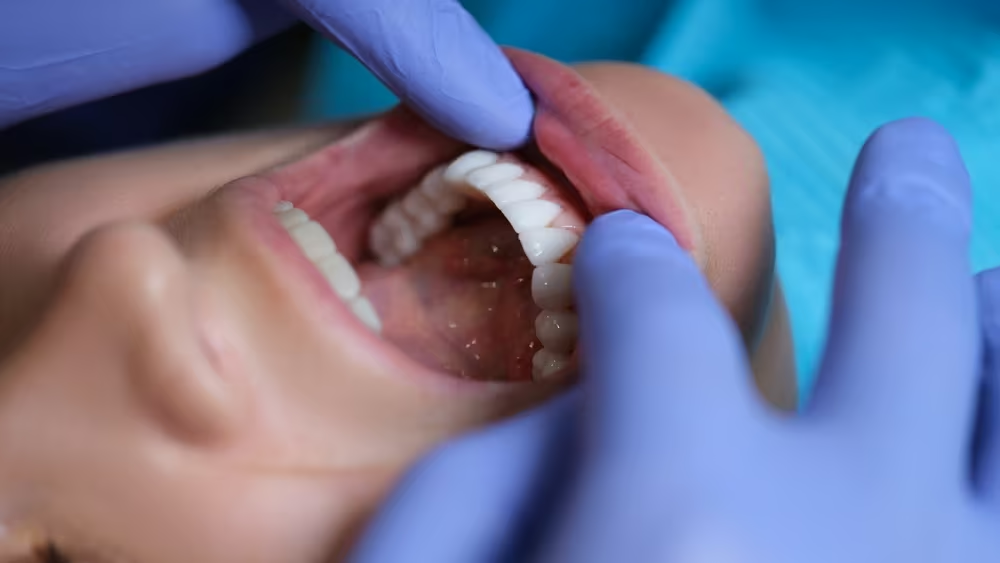
Earlier this year, figures cited in the British Dental Journal suggested that roughly one in eight patients presenting at UK dental practices for remedial veneer work had their original treatment carried out abroad. That is not a fringe statistic. It represents a significant and growing group of people who made a decision, often a reasonable one given the cost pressures involved, and are now living with results that range from disappointing to genuinely harmful.
If you are among them, the first thing worth knowing is this: you are not alone, and the decision you made does not define what happens next.
The overseas dental market grew sharply between 2022 and 2025. Veneers that might cost between £600 and £1,200 per tooth at a UK practice were being offered in Turkey, Hungary, and Albania for a fraction of that price, often with flights and accommodation included. For patients who had spent years postponing treatment because of cost or anxiety, this felt like a genuine solution. Many came home initially pleased. Some still are. But a growing number are discovering, often between six and eighteen months later, that something has gone wrong.
What “Bad Veneers” Actually Means Clinically
The phrase bad veneers covers several distinct problems, and it matters which one you are dealing with because the remediation is different in each case.
The three presentations UK clinicians encounter most frequently with overseas work are as follows.
Veneers Placed Over Unresolved Decay
A veneer placed over a tooth with active decay beneath it does not stop that decay. It conceals it. The decay continues to progress, unseen, until it reaches the pulp of the tooth or causes the veneer to fail from the inside. By the time a patient notices a problem, the underlying tooth may be in a far worse state than it was before the veneer was placed. This is not a cosmetic issue. It is a structural one with real clinical consequences.
Aggressive Preparation That Has Removed Too Much Enamel
Porcelain veneers require the removal of a thin layer of enamel from the tooth surface. When that preparation is too aggressive, the dentine beneath becomes exposed. Dentine is porous and sensitive. It cannot be replaced. Once it is gone, the options for what can be placed over that surface, now and in future, are permanently limited. Patients in this situation often notice significant sensitivity to cold and pressure, sometimes from the very first weeks after treatment.
Shade and Shape Results the Patient Regrets
The third category is the one patients are often most reluctant to discuss, perhaps because it feels less medical and more like a matter of personal taste. During a short overseas trip, with money already spent and social expectations from family or travel companions running high, many patients accept a result in the chair that they would not have accepted at home with time to reflect. They return to Essex, look at their smile in familiar surroundings, and realise the shade is too white, the shape is too uniform, or the proportions look wrong on their face. That regret is valid, and it is clinically addressable.
When Problems Become Apparent
Most overseas veneer failures do not announce themselves immediately. The typical window is six to eighteen months after treatment. This is when sensitivity tends to increase noticeably, when the gum line begins to recede slightly and exposes the margin where the veneer meets the tooth, and when chips or cracks appear at the biting edge. These are not signs of bad luck. They are signs that something in the original treatment was not right.
Some patients notice problems much sooner. The colour simply does not match what was shown in consultation imagery. The shape looks different in natural light than it did in the clinic. But rather than raise it, they stay quiet. They tell themselves they will adjust to it. They feel embarrassed to admit they spent a considerable sum of money on a result they are not happy with, and they certainly do not want to walk into a UK dental practice and explain the whole story.
That embarrassment is understandable. It is also one of the most common reasons problems worsen unnecessarily.
Why Waiting Makes It Worse
Dental anxiety creates a particular kind of avoidance cycle. The original anxiety led to postponed treatment. The postponed treatment led to a decision to go abroad. A difficult result abroad has led to fresh embarrassment. And that embarrassment has restarted the avoidance cycle from a worse position than before.
The clinical reality is straightforward. A veneer placed over decay that is caught early may require the veneer to be removed and the decay treated, after which a replacement can be placed. The same veneer caught eighteen months later may mean the tooth beneath is no longer restorable by those means. Waiting does not preserve options. It reduces them.
Many patients who eventually come to a practice like Perfect Smile Spa having avoided the issue for a year or more say the same thing: they were far more worried about being judged than they were about the treatment itself. They expected to be told off. They expected to feel ashamed. In almost every case, that expectation was not matched by what they actually experienced when they finally sat down with a clinician.
There is no judgement here. There never should be. You made a decision with the information and resources you had at the time. What matters now is what can be done to put things right.
Signs That You Need an Assessment Without Further Delay
If you had veneers placed abroad and you are experiencing any of the following, a clinical assessment is the appropriate next step rather than something to keep postponing.
- Sensitivity to cold drinks or food that has developed or increased since your veneers were placed
- Sensitivity to pressure when biting, particularly on the teeth that were treated
- A dark line or shadow becoming visible at the gum margin where the veneer meets the tooth
- A colour mismatch that has become more obvious over time rather than less
- A chip or crack in a veneer that is less than two years old
- A feeling that one or more veneers has moved slightly or no longer sits flush against the tooth
None of these symptoms will resolve on their own. Each one is a signal that something beneath or around the veneer requires attention.
What Remediation Actually Involves
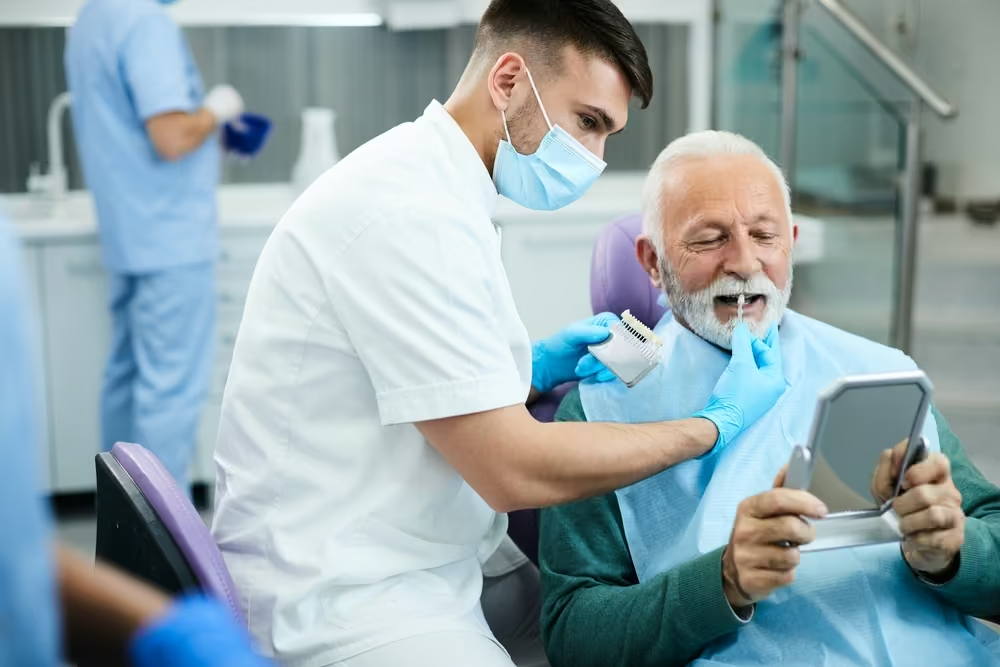
The process of addressing overseas veneer work begins not with drilling or replacement, but with a thorough clinical picture of what is actually present. X-rays will identify whether there is decay beneath any veneer. A careful assessment of the preparation will indicate how much enamel remains and what that means for future options. Shade analysis will establish what a realistic match looks like if replacement veneers are needed.
Only once that picture is clear does it make sense to discuss what remediation looks like and in what order. Some patients need one or two veneers replaced. Some need underlying decay treated first, with replacement veneers as a second phase. Some simply need reassurance that what they have is structurally sound and only a shade adjustment is warranted. There is no single answer, and any clinician who gives you one before completing a thorough assessment is not giving you the full picture.
Phased treatment is often the most sensible approach, both clinically and in terms of managing anxiety and cost. Addressing the most urgent issues first, stabilising the situation, and then planning cosmetic improvements in stages means you are never taking on more than is necessary at any one point.
How Perfect Smile Spa Approaches Overseas Veneer Cases
At Perfect Smile Spa in Hornchurch, the team sees a steady number of patients arriving with overseas veneer work that has not gone as hoped. This is not a rarity any more, and there is no surprise or judgement attached to it.
The starting point for every overseas veneer assessment is clinical clarity. The aim is to understand precisely what was done, what the current state of each treated tooth is, and what the realistic options are. That information is then shared with the patient clearly and without pressure, so that any decisions about treatment are made with a full understanding of the situation.
Shade matching for replacement veneers is one of the more technically demanding aspects of this work. A single replacement veneer needs to sit alongside existing teeth and, if some of the original overseas veneers are being retained, those existing veneers too. The team at Perfect Smile Spa has experience managing exactly this kind of complex shade scenario, using dental veneers crafted to integrate naturally with a patient’s existing dentition rather than simply delivering a generic bright result.
For patients who are nervous about the assessment itself, sedation dentistry is available. An initial consultation does not involve any treatment. It is a conversation and an examination, nothing more. For those who have been avoiding this step for months because of anxiety or shame, that distinction is worth holding on to.
The practice also provides cosmetic dentistry across a full range of treatments, which means that if remediation opens up options for broader smile improvement once the underlying situation is stable, those options can be explored within the same practice and the same ongoing relationship with a clinician who knows your case.
Taking the Next Step
Regretting a previous dental decision is not a reason to delay addressing it. The clinical consequences of waiting consistently exceed the discomfort of seeking help, and the fear of judgement that keeps so many patients in avoidance is almost never matched by the reality of a consultation with a clinician who genuinely wants to help.
If you had veneers placed abroad and something does not feel right, whether that is a physical symptom or simply a result you have never been happy with, book an assessment at Perfect Smile Spa. The conversation starts with where you are now, not with how you got there.
The team is here to help you understand your options and build a realistic plan for putting things right.