
Most Professionals Wait Too Long for Composite Bonding
There is a five-year window in your mid-30s when tooth structure, gum health, and lifestyle stability converge to deliver the longest-lasting results from composite bonding. Most professionals miss it entirely. They either act too soon, before habits and routines have settled, or wait until their early 40s when wear patterns and gum changes have already begun shifting the treatment picture. That gap between when patients think they should act and when treatment actually delivers maximum value costs them both money and years of confidence.
If you are 33 to 38, searching for composite bonding in Essex, and wondering whether now is really the right time, this article is written directly for you.
The Clinical Sweet Spot: Ages 33 to 38
Composite bonding works best when the underlying tooth structure supports it. In your mid-30s, enamel thickness remains sufficient for minimal preparation, meaning the dentist can apply composite resin without removing significant natural tooth material. Gum recession, which gradually alters tooth proportions and complicates bonding margins, has not yet become a factor for most patients. Bite patterns have stabilised. And critically, the lifestyle turbulence of your 20s has largely settled.
This window closes gradually. Natural wear accelerates through the late 30s. Grinding patterns become more established. Gum architecture shifts. By 42 or 43, many patients who would have been straightforward composite bonding candidates at 36 require more extensive preparation, more complex margin work, or a conversation about whether porcelain veneers would serve them better. None of that is catastrophic, but all of it adds cost, complexity, and time.
The 33-to-38 bracket is not a marketing claim. It reflects a genuine clinical alignment that dental professionals see repeatedly in practice.
Why Mid-Career Timing Works in Your Favour
Beyond the biological factors, mid-career professionals carry a set of lifestyle characteristics that protect composite bonding longevity in ways that younger patients simply do not yet have.
Oral hygiene habits are established and consistent. The irregular routines of early-career years, late nights, erratic schedules, and the dietary patterns that come with them, have largely resolved by the mid-30s. That consistency matters enormously, because bonding that is properly maintained from day one lasts significantly longer than bonding that endures neglect in its early months.
Staining habits tend to reduce through this period as well. Heavy coffee consumption, red wine, and smoking rates all decline among professionals as they move through their 30s. Composite resin is porous and absorbs pigment over time, so patients who place bonding during a period of lower staining exposure simply retain better aesthetics for longer.
Work schedules have also stabilised enough to accommodate six-monthly hygienist appointments. This single factor, more than almost any other, determines whether composite bonding lasts four years or seven. Patients who attend regular hygiene visits benefit from professional cleaning that removes surface staining before it penetrates, and from early identification of any wear or edge chipping that can be repaired before it propagates.
And professionally, this is exactly when visibility matters most. Networking activity, client-facing roles, and social media presence all peak during mid-career years. The professional return on aesthetic investment is higher at 36 than at 46, purely because of where you are in your career arc.
Why Patients Miss the Window
The reasons are understandable, even if the outcome is frustrating.
Most professionals assume cosmetic dentistry exists to correct significant problems, dramatic gaps, severely discoloured teeth, or major chips. They look at their own moderate concerns, slight translucency at incisal edges, minor spacing, mild discolouration, and conclude they do not qualify yet. They are waiting for a threshold of visible damage that justifies treatment. The problem is that threshold arrives precisely when the optimal biological window for composite bonding has already closed.
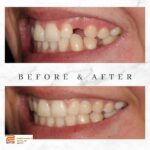
Instagram and TikTok marketing reinforce this. Cosmetic dentistry content targets younger demographics with dramatic before-and-after transformations. A 35-year-old with perfectly reasonable concerns and good underlying tooth structure scrolls past content that feels irrelevant to their situation, and concludes the treatment category is not for them yet.
Dental practices themselves rarely discuss preventive aesthetics. Bonding is framed as corrective work, something you do when things have gone wrong, rather than protective investment in foundations that are still in good shape. That framing leaves patients waiting for deterioration rather than acting during the period when deterioration can be most cost-effectively prevented.
How to Assess Your Own Timing
You do not need a clinical degree to perform a basic self-assessment. Stand in natural light and look closely at your front teeth. Check the biting edges of your upper incisors. If you can see slight translucency, the enamel is still present but wearing. That translucency tells you enamel thickness supports bonding without aggressive preparation, and it tells you the clock is running.
Look at your gum line across the front four to six teeth. Is it consistent and even, or are there areas where recession has already begun pulling gums back to reveal slightly more tooth length than others? Consistent gum architecture makes bonding margins straightforward. Recession patterns complicate them.
Ask yourself honestly whether minor chips, gaps, or discolouration currently bother you in professional settings. Photographs, video calls, and client-facing presentations expose these details in ways that casual social situations do not. If the answer is yes, even occasionally, those concerns will compound as natural wear progresses. Addressing them now, while the underlying structure is sound, prevents the incremental damage that makes future treatment more invasive and more expensive.
Finally, consider whether your schedule supports six-monthly hygienist appointments. If the answer is yes, you have the single most important maintenance factor in place.
How Perfect Smile Spa Approaches Timing Consultations
At Perfect Smile Spa in Hornchurch, the consultation process is specifically structured to identify whether a patient falls within the optimal biological window for composite bonding, or whether waiting briefly or acting immediately serves their long-term interests better. This is not a standard cosmetic consultation where the default answer is to proceed.
The practice photographs tooth structure, gum architecture, and wear patterns to create a visual record that demonstrates how current timing affects both treatment longevity and projected future costs. For professionals who value data-driven clarity, this approach replaces vague reassurances with concrete evidence about where your teeth currently sit in the treatment-readiness spectrum.
Treatment plans include projected maintenance schedules and realistic lifespan expectations based on individual patient factors rather than generic averages. You leave knowing not just what the treatment involves, but what the full investment cycle looks like across the next 10 to 15 years. That transparency is the foundation on which a genuinely informed decision can be made.
Perfect Smile Spa serves patients across Essex and East London, offering composite bonding alongside a full range of cosmetic and general dentistry services from its Hornchurch practice on the High Street.
The Right Time Is Before the Window Closes
The right moment for composite bonding is not when damage becomes obvious. It is when your tooth structure, lifestyle stability, and career visibility align to maximise treatment longevity and professional impact. For most professionals, that moment is happening right now, somewhere between 33 and 38, and it passes quietly without any clear signal that the optimal window has closed.
Book a consultation at Perfect Smile Spa to find out whether you are currently in the optimal window, and to get a clear, honest picture of what treatment now versus treatment later actually means for your smile, your schedule, and your budget.