
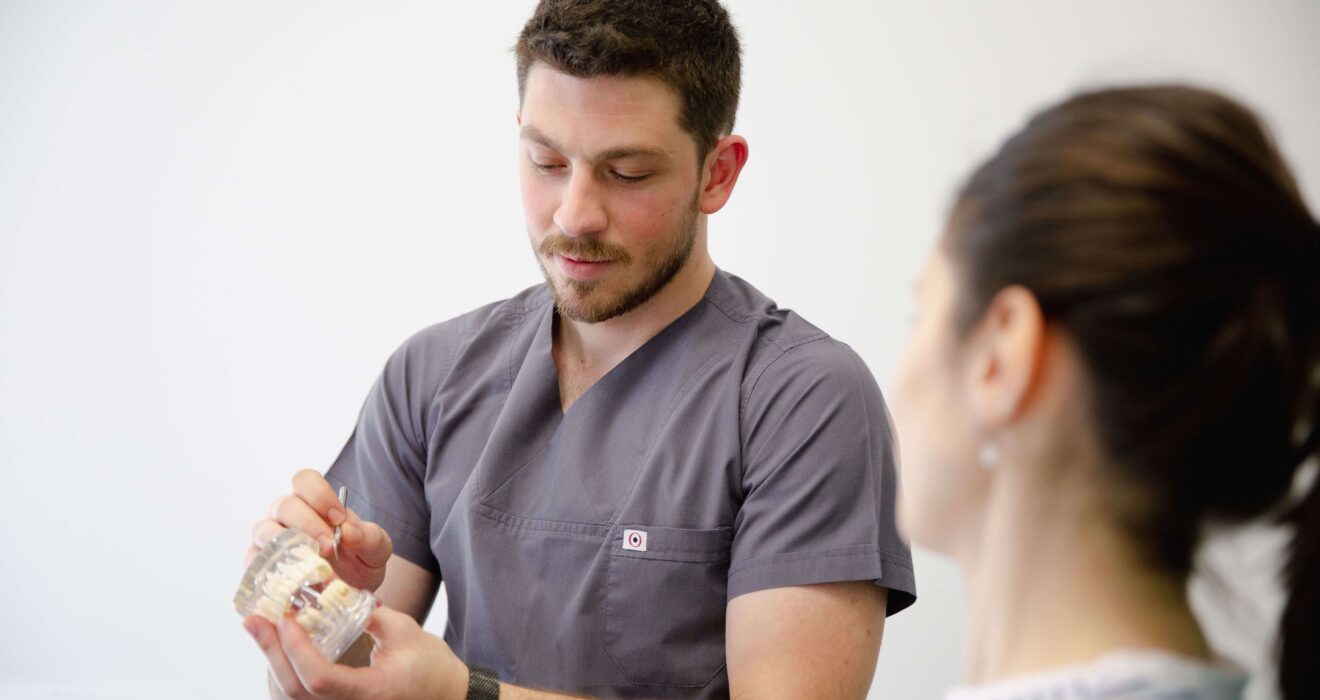
There are three main implant options. A single implant replaces one tooth, with the crown fitted a few months later. Same-day implants fit new teeth on the day of surgery if you have enough healthy bone. All-on-4 replaces a full arch on four implants. At Perfect Smile Spa in Hornchurch, implants start from £1,159, with 0% finance available.
Losing a tooth, or living with a denture that moves when you eat, affects more than your smile. It changes what you order at a restaurant, how you speak and how often you hold back a laugh. Dental implants replace the root of a missing tooth as well as the part you can see, which is why many people now choose them over bridges and dentures.
If you’re looking into dental implants in Essex, you’ll soon come across three options: single implants, same-day implants and All-on-4. Each one solves a different problem. This guide explains who each option suits, what happens at every stage, how long recovery takes and what treatment costs are, so you arrive at your consultation knowing what to ask. For full details of treatment at our Hornchurch practice, see our page on dental implants in Essex.
Single, same-day or All-on-4: the short answer
The right option depends on how many teeth you’re missing, the health of your gums and jawbone, and how quickly you want your new teeth. Here’s a quick comparison before we go into each one.
| Implant option | Best suited for | Number of implants | When you get your new teeth |
|---|---|---|---|
| Single implant | Replacing one missing tooth | Usually one implant per tooth | Usually a few months after surgery |
| Same-day implants | People who want new teeth fitted on the day of surgery | Depends on the treatment plan | On the day of surgery, if suitable |
| All-on-4 | Replacing a full arch of teeth | Four implants per arch | Usually on the day of surgery |
Your dentist will confirm which option is right for you after an examination and a CT scan. The rest of this guide explains each one in more detail.
What is a dental implant?
A dental implant is a small screw-shaped post, usually made of titanium, that your dentist places into the jawbone where a tooth used to be. Over the following weeks, the bone grows around the post and holds it firmly in place, much like a natural tooth root.
Once the implant is secure, it supports a replacement tooth. That might be a single crown, a bridge covering several teeth or a full arch of fixed teeth. Because the implant sits in the bone, it doesn’t rely on neighbouring teeth for support, and it doesn’t move when you eat or speak.
Single dental implants
A single implant replaces one missing tooth with one implant and one crown. It’s the most common type of implant treatment and a good fit if the rest of your teeth are healthy.
Who a single implant suits
A single implant is often a good choice if:
- You’ve lost a tooth to decay, injury or a failed root canal.
- The teeth either side of the gap are healthy and you’d rather not have them filed down to support a bridge.
- You want a tooth that looks, feels and cleans like your own.
- You have enough jawbone to hold the implant, or you’re willing to have bone added first if you don’t.
If you’re missing a few teeth in different parts of your mouth, each gap can be treated with its own implant.
How a single implant compares with a bridge or denture
A traditional bridge needs the teeth on either side of the gap to be reshaped and crowned, even when they’re healthy. A partial denture avoids that, but it’s removable and can feel loose. A single implant stands on its own, so your other teeth stay untouched. It also helps keep the jawbone in that area healthy, as bone tends to shrink where a tooth root is missing.
The trade-off is time. With a standard single implant, your permanent crown is usually fitted a few months after surgery, once the implant has bonded with the bone.
Same-day dental implants
Same-day implants, sometimes called “teeth in a day”, let you leave the practice with new teeth fitted on the same day as your implant surgery. There’s no waiting with a gap and no need for a removable denture while you heal.
Who same-day implants suit
Same-day implants can work well if:
- You want to avoid any time without teeth, especially at the front of your mouth.
- You have enough healthy jawbone to hold the implants firmly straight away.
- Your gums are healthy, or any gum problems have been treated first.
- You’re happy to follow a softer diet while the implants settle.
Not everyone is suitable. Placing teeth on an implant straight away needs the implant to be very stable from the start, which depends on the quality and amount of bone. Your CT scan will show whether this is possible for you.
What “same day” means in practice
The teeth fitted on the day are fixed and look natural, so you can smile, talk and eat soft foods from day one. In many cases, the teeth fitted on the day are a first set, and a final set is made once your gums and bone have fully healed.
All-on-4 dental implants
All-on-4 replaces a full arch of teeth, upper or lower, using just four implants. A fixed bridge of new teeth is attached to those four implants, usually on the same day as surgery. It’s designed for people who have lost most or all of their teeth, have several teeth that are failing, or are tired of dentures that slip.
Who All-on-4 suits
All-on-4 is often a good option if:
- You’re missing most or all of the teeth in your upper or lower jaw.
- You wear a full denture and want something fixed that doesn’t move.
- Several of your remaining teeth are loose, decayed or failing.
- You’ve been told in the past that you don’t have enough bone for implants.
Why four implants can be enough
With All-on-4, the two back implants are placed at an angle. This lets them use the denser bone towards the front of the jaw and avoid areas where bone has thinned. As a result, many patients who would otherwise need a bone graft can have treatment without one, which can mean fewer appointments and a shorter overall treatment time.
Because the bridge is fixed in place, you don’t take it out at night. You clean it much like natural teeth, with a few extra tools your hygienist will show you.
The dental implant process, step by step
Whichever option you choose, treatment at our Hornchurch practice follows the same clear steps.
- Free consultation.
You’ll talk through what’s bothering you and what you’d like to achieve. We’ll look at your teeth, gums and medical history, and explain which options could work for you. - CT scan and planning.
A CT scan gives a 3D picture of your jawbone, so we can check its quality and plan exactly where each implant will go. - Your treatment plan.
We’ll agree a written plan with you, including the number of implants, the type of teeth, timings and costs, along with finance options if you’d like to spread the cost. - Treatment day.
Implants are placed under local anaesthetic, so you shouldn’t feel pain during the procedure. If you’re nervous, IV or oral sedation is available to help you relax. - Your new teeth.
With same-day implants and All-on-4, your new teeth are fitted on the same day. With a standard single implant, the crown is fitted once the implant has bonded with the bone. - Aftercare and check-ups.
You’ll go home with clear aftercare instructions, and we’ll see you for follow-up checks to make sure everything is healing as it should.
Recovery: what to expect after dental implants
Most people are surprised by how manageable recovery is. Everyone heals at a different pace, and your dentist will give you advice specific to your treatment, but here’s a general guide.
The first few days
Some swelling, tenderness and minor bruising are normal for the first two or three days. Over-the-counter pain relief is usually enough, and a cold compress on the cheek can help with swelling. Stick to soft foods, avoid very hot drinks, and don’t smoke, as smoking slows healing and increases the risk of the implant failing.
Most people who have a single implant are back at work within a day or two. After All-on-4 or several implants, you may want a few days to rest.
The first few weeks and months
Over the next few months, the bone grows around the implant and fixes it in place. During this time, you’ll be asked to eat softer foods, especially if you’ve had same-day teeth or All-on-4, and to avoid biting hard on the implant area. For most people, this bonding stage takes around three to six months, and your dentist will check progress at your follow-up visits.
Looking after your implants long term
Implants can’t decay, but the gums around them can become inflamed if plaque builds up. Brush twice a day, clean between your teeth and around the implants with the tools your hygienist recommends, and keep up regular check-ups and hygiene appointments. Looked after well, implants can last for many years.
How much do dental implants cost in Essex?
At Perfect Smile Spa, dental implants start from £1,159. We also offer no-deposit 0% finance, with payments from £65 per month (terms and conditions apply).
The final cost depends on your treatment plan. The main factors are:
- How many implants you need. A single implant costs less than a full arch, although All-on-4 can be better value than replacing many teeth one by one.
- Any treatment needed first. Some people need gum treatment, extractions or a bone graft before implants can be placed.
- The type of teeth fitted. A single crown, a bridge and a full-arch restoration are priced differently.
- Sedation. If you choose IV or oral sedation, this may be included in your plan or charged separately.
You’ll get a clear, written quote after your free consultation and CT scan, so there are no surprises later.
Why choose Perfect Smile Spa for dental implants in Hornchurch?
Our practice in Hornchurch welcomes implant patients from across Essex, including Romford, Upminster and Brentwood, as well as East London. When you come to us, you can expect:
- A free implant consultation with no obligation to go ahead.
- CT scan planning, so your treatment is based on a detailed 3D picture of your jawbone.
- Pain-free treatment under local anaesthetic, with IV or oral sedation for nervous patients.
- No-deposit 0% finance, with payments from £65 per month (terms and conditions apply).
- Aftercare and follow-up checks as part of your treatment.
Dental implant FAQs
Do dental implants hurt?
The procedure is carried out under local anaesthetic, so you shouldn’t feel pain while the implants are placed, only some pressure. If you’re anxious, IV or oral sedation can help you feel calm and relaxed throughout. Afterwards, most people describe some soreness and swelling for a few days, which is usually well controlled with everyday pain relief.
How long does the dental implant procedure take?
It depends on your treatment. Placing a single implant often takes around an hour, while All-on-4 for a full arch takes longer and is usually done in one visit. The whole process, from your first consultation to your final teeth, can take anywhere from a single day for same-day teeth to several months for a standard single implant.
How long do dental implants last?
With good care, dental implants can last for many years, and many people keep theirs for life. The crown or bridge on top may need replacing at some point because of everyday wear. Brushing well, cleaning around the implants, not smoking and keeping up regular check-ups all make a real difference to how long they last.
Can I get dental implants on the NHS?
In most cases, dental implants aren’t available on the NHS. They’re generally only offered in hospital settings for specific medical reasons, such as after mouth cancer treatment or serious injury. For most people, implants are a private treatment, which is why we offer no-deposit 0% finance to help spread the cost over monthly payments.
Can I have dental implants if I have gum disease?
Active gum disease needs to be treated before implants are placed, because it can affect how well the implants bond with the bone and how long they last. Once your gums are healthy and stable, implants are often still possible. We’ll check your gum health at your consultation and explain any treatment you need first.
What if I’ve been told I don’t have enough bone for implants?
Bone loss is common where teeth have been missing for a while. All-on-4 was designed partly for this situation, using angled implants to make the most of the bone you have, and it often avoids the need for a bone graft. Your CT scan will show exactly how much bone you have and which options will work.
Book your free implant consultation in Essex
Choosing the right implant treatment starts with a conversation. At your free consultation, we’ll listen to what you want, check your teeth, gums and jawbone, and talk you through the options that suit you, with clear costs and no pressure to go ahead.